
Funding Equality: Kentucky's Rosenwald Schools
In 1954, the Supreme Court case, Brown v. Board of Education, ruled that segregation in public schools was unconstitutional. The case ended fifty-eights years of “separate but equal” educational laws, first established by Plessy v. Ferguson in 1896, which required Black Americans throughout the South to attend separate schools from whites. In addition to separate schools, Plessy established a brutal regime of de jure segregation in the United States, otherwise known as Jim Crow (1880s to 1960s). During Jim Crow, Black schools in the South received scarce funding, if any, and students had to deal with dilapidated and overcrowded facilities as well as makeshift desks and outdated materials.
Black Southerners, however, did not sit idly by in the face of unequal treatment. Communities, in collaboration with county governments, organizers, and private philanthropists, created schools by and for Black people. One of the most notable funding bodies for Black schools was the Rosenwald Rural School Building Project. Julius Rosenwald, president and owner of Sears, Roebuck & Co., and Booker T. Washington, the famous Black intellectual, created the project as a philanthropic endeavor to fund schools for Black students in the South beginning in 1917.
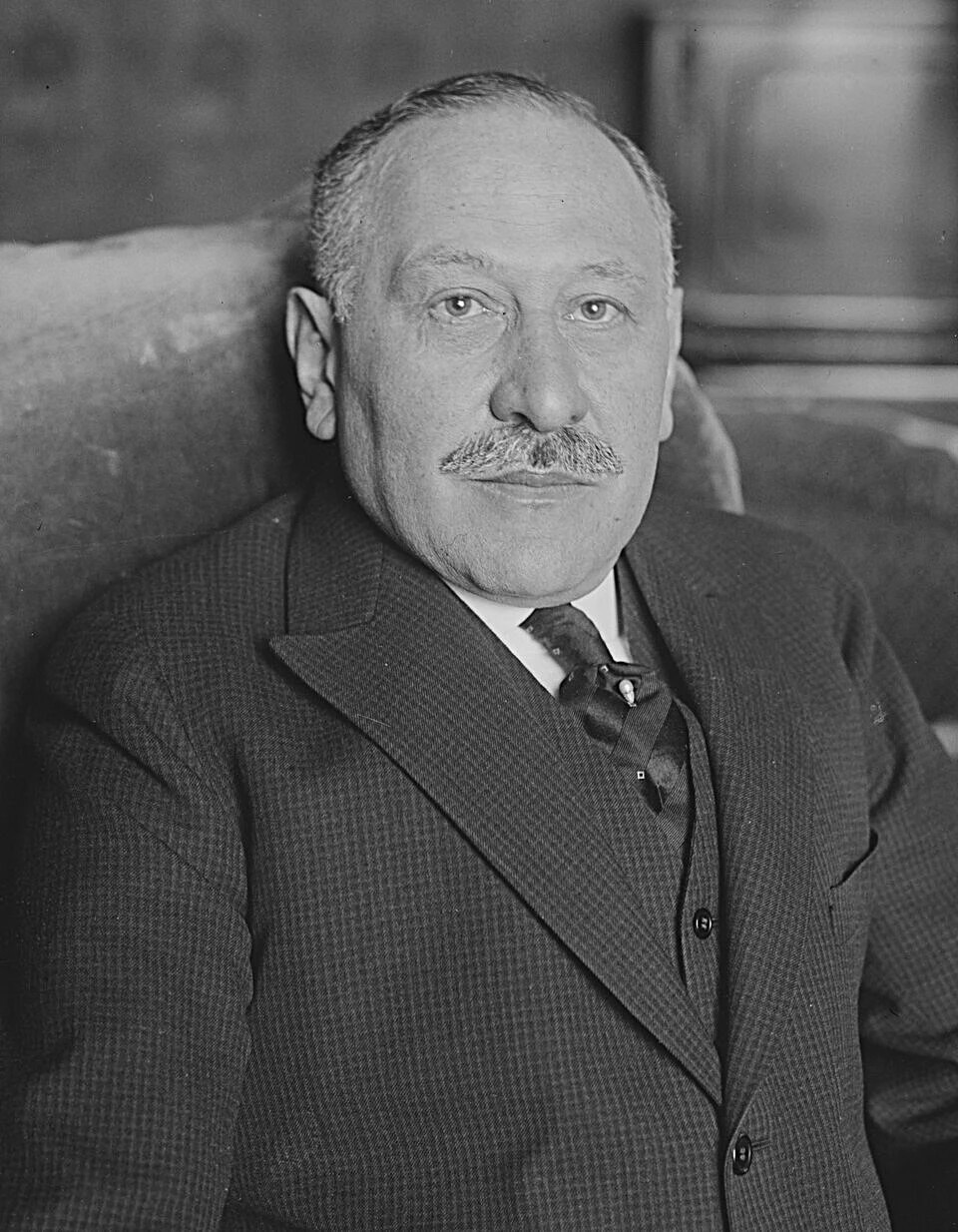
Portrait of J. Rosenwald, 1915. George Grantham Bain Collection, Library of Congress Prints and Photographs Division, Washington, D. C.
Several “Rosenwald Schools,” as they came to be known, emerged in Kentucky, where Black Kentuckians, like African Americans across the South, were segregated from whites not just in schools but also in virtually all public spaces.1 Segregation created vastly different educational and life experiences for white and non-white children in the United States. Rosenwald schools functioned to close this gap despite the restrictions of Jim Crow elsewhere in society. They provided “safe havens” for children of color away from the oppression they faced on a day-to-day basis.
The process of selecting a community to host a Rosenwald school was not so simple as there were several requirements that applicants had to comply with to be eligible for the funding. Julius Rosenwald also only provided one-third of the cost of building the schools, which was contingent on selected communities’ ability to provide financial and social support as well.2 Additionally, communities had to guarantee land for playgrounds and agricultural work. They were also responsible for equipping and furnishing the schools after their construction.
The idea of Rosenwald schools emerged at a moment in the twentieth century when the Black intellectual community, represented by figures such as W. E. B. Du Bois, Mary Burnett Talbert, and Booker T. Washington, offered a spectrum of ideas and arguments in literature, art, and scholarship regarding Black equality and racial uplift. Black intellectuals approached equality in the U.S. in vastly different ways. Washington focused on advocating interracial solidarity through practical and industrial education. In Washington’s autobiography, Up from Slavery (1901), he argued that self-improvement and hard work was the path to equality. Washington, who began his life enslaved in Virginia in 1856, believed that through specializations in trades (e.g. carpentry, farming, and building) African Americans would earn white peoples’ respect by becoming “indispensable” to society. Thus, he believed that Black Americans needed to earn white political and cultural acceptance before legal equality.3
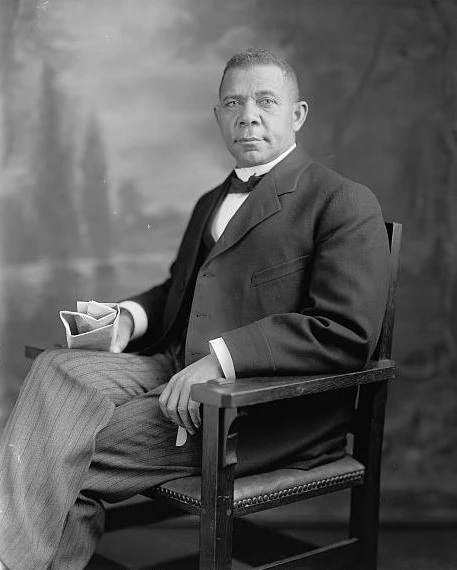
Portrait of Booker T. Washington, 1905. Glass negative created by Harris and Ewing Photographic Studio. Harris & Ewing Photograph Collection, Library of Congress Prints and Photographs Division, Washington, D. C.
Other leaders ardently disagreed with what they called the “accommodationist” strategy. W. E. B. Du Bois, one of the founders of the National Association for the Advancement of Colored People (NAACP), argued that African Americans should not have to compromise their legal or social rights for whites to accept them into society, and that Black Americans should embrace their African identity.4 Du Bois articulated many of these ideas in “Of Mr. Booker T. Washington and Others,” a rebuttal to Up from Slavery, which appeared in Du Bois’s popular collection of essays, The Souls of Black Folk (1903). With respect to education, Du Bois advocated for more traditional liberal arts curriculum in Black schools. The latter, he argued, was critical for cultivating Black leadership. Regardless of their philosophical differences, the need for systemic Black education bridged these different viewpoints. African Americans across the intellectual divide considered education a foundational step for racial equality and, thus, investment in Rosenwald, and Rosenwald-like, schools were important.
To be clear, Rosenwald schools did not directly combat or reject the ideas of Jim Crow’s “separate but equal” framework. These schools worked within the legal framework they had to follow. However, the building program did allow Black communities to organize their own educational priorities, create their own curriculum, and, ultimately, gain authority over education and leadership in their communities. As historian Le Datta Grimes aptly puts it, “the rural school building program was a social experiment in Black self-help, interracial cooperation, and private-public collaboration.”5 In short, they made the best of a troubled system.
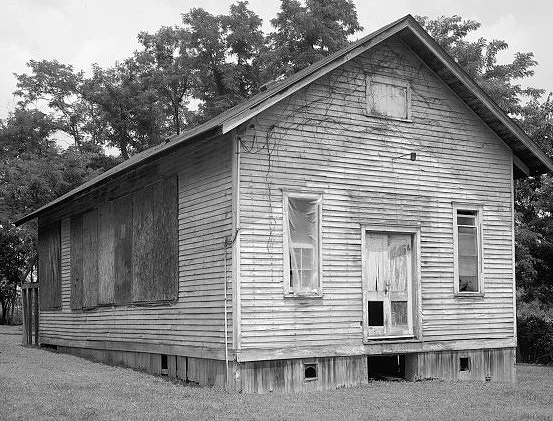
Cadentown Rosenwald School, Lexington, Fayette County, KY, ca. 1933. Call num.: HABS KY-288, Historic American Building Survey, Library of Congress Prints and Photographs Division, Washington, D.C.
Unlike other Southern states, Kentucky received significantly less funding from the Rosenwald project for school buildings, only utilizing about 3 percent of the entire pool of money.6 The entire program, which built more than 3,500 schools in 15 Southern states, only built 158 Rosenwald schools and related educational buildings in Kentucky between 1917 and 1932, the year the building project ceased funding.7 The relative lack of Rosenwald-funded projects in the commonwealth was not because Black Kentuckians valued education any less than their counterparts across the South. In fact, it was quite the opposite.
Kentucky had a solid foundation for Black education in the early twentieth century and, therefore, was not in need of as many Rosenwald projects as other Southern states.8 Demographically, Kentucky also had a significantly lower Black population than other states in the South. Outside of Louisville, Black Kentuckians were spread thinly throughout the state. This complicated large-scale fundraising endeavors, such as Rosenwald building projects.9 Thus, a combination of these variables dictated the smaller presence of Rosenwald schools in the commonwealth versus the rest of the South.
For those students who attended the Rosenwald schools in Kentucky, the experience and quality of education they received was incredibly impactful.
Dr. Alicetyne Turley, first vice president of the Kentucky Historical Society Governing Board, was herself a student at one of Kentucky’s Rosenwald schools. In an interview I conducted with Dr. Turley in January 2026, she expressed that her Rosenwald education was top quality. In addition to her personal experience, Turley has produced scholarship on the Rosenwald schools in Kentucky, including a study for the Kentucky Heritage Council. Her assessment, which she offered in our conversation, was that these schools represented the “first space where Black people could design their own curriculum, and many of them [the teachers, leaders of these school boards] attended HBCUs like Kentucky State, they had their own autonomy without oversight from white school boards or power structures.”10
Ironically, integration negatively impacted much of the community-driven and innovative education these schools developed, a change which Dr. Turley likewise pointed out in our interview. In part, this stemmed from the fact that integration squeezed Black educators. That is, many, who possessed graduate degrees, were dismissed for their often less qualified white counterparts or simply because defiant school boards refused to have Black teachers supervise white students. Others were recruited for specific jobs outside of their community. Consequently, many Black students were ignored in the integrated classroom. Without the curriculum that was designed by and for their community, many families felt this education was worse than what Rosenwald institutions had previously provided. Dr. Turley’s family, frustrated with this disparity, moved out of Kentucky to seek better educational opportunities.11
The autonomy and control that school boards and communities created in conjunction with the Rosenwald building project was lost as white authority was re-instated over Black education. This came, however, at a time when legal rights for African Americans were expanding broadly. Consequently, feelings about integration were a mixed bag among Black community members. While integration allowed for more legal protection in public spaces and institutions, it also, some believed, diminished the work they had done for Black education in their communities.
Integration did not wipe these buildings from the landscape or Black Kentuckians’ memory of them. In fact, a few Rosenwald schools did not close their doors in Kentucky until the late 1970s. In recent years, preservation work by the Kentucky Heritage Council, the National Register of Historic Places, and hard-working community members have kept the memory of these schools alive today. As the Heritage Council articulated in their 2019 survey, “The Rosenwald Building Project left behind a rich collection of buildings and culture worthy of documentation, preservation, conservation and interpretation.”12
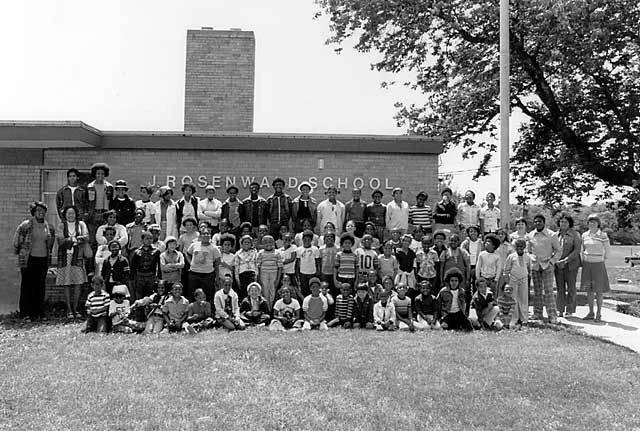
Last School Picture of Rosenwald Laboratory School, Kentucky State, 1977. Community Members: A Glimpse of African American Life in Frankfort, Ky., Kentucky Historical Society Digital Collection, Frankfort.
The Rosenwald building program, while it brought more publicity and financial backing to African American schools, was not the beginning or end of Black organization and advocacy for education in their communities. Black Americans throughout history have found and will continue to find avenues for educational advancement despite the challenges thrown at them.13 The few Rosenwald buildings left in Kentucky today stand as a reminder of Black Kentuckians’ hard work, sacrifice, and refusal to accept a lesser form of education. Further, they provide insight into the great debates of Black intellectuals, such as Du Bois and Washington, during the early twentieth century. More importantly, the schools are powerful reminders of Black Americans’ organizing power, their commitment to education, and their defiance to white supremacy.
As we near the 250th anniversary of our nation’s founding, the legacy of Rosenwald schools remind us that “life, liberty, and the pursuit of happiness” has not been a historically guaranteed right for all members of our society. Rather, education and opportunity for marginalized communities has been the product of hard work, sacrifice, and a “yearning to breathe free.”14
Additional References:
Hilary Green, Educational Reconstruction: African American Schools in the Urban South, 1865–1890 (Fordham University Press, 2016).
Stephanie Deutsch, You Need a Schoolhouse: Booker T. Washington, Julius Rosenwald, and the Building of Schools for the Segregated South (Northwestern University Press, 2011).
Robert J. Norrell, Up from History: The Life of Booker T. Washington (Belknap Press, 2011).
Adam Fairclough, Teaching Equality: Black Schools in the Age of Jim Crow (The University of Georgia Press, 2001).
Gerald L. Smith, A Black Educator in the Segregated South: Kentucky's Rufus B. Atwood (The University Press of Kentucky, 1994).
NOTES
[1] “What was Jim Crow,” Jim Crow Museum, https://jimcrowmuseum.ferris.edu/what.htm.
[2] Alicestyne Turley-Adams, “Rosenwald Schools in Kentucky, 1917–1932,” (The Kentucky Heritage Council, 1997; Reprint, 2005), 17, https://heritage.ky.gov/aa-na/Documents/Rosenwald%20Schools%20in%20KY%2c%201917-1932.pdf.
[3] Zachary Hutchins, “Booker T. Washington, 1856–1915 and Frank Beard, 1842–1905,” Documenting the American South, https://docsouth.unc.edu/neh/washstory/summary.html.
[4] “W. E. B. DuBois,” NAACP: Civil Rights Leaders, https://naacp.org/find-resources/history-explained/civil-rights-leaders/web-du-bois.
[5] Le Datta Denise Grimes, “‘They Did This Work’: Black Activism, Education, and the Rosenwald Rural School-Building Program in Kentucky” (PhD diss., University of Kentucky, 2021), 75, https://uknowledge.uky.edu/cgi/viewcontent.cgi?article=1080&context=history_etds.
[6] “Rosenwald Schools in Kentucky,” Notable Kentucky African Americans Database, https://nkaa.uky.edu/nkaa/items/show/1472.
[7] “Rosenwald Schools in Kentucky,” Preservation Kentucky (April 2019), The Kentucky Heritage Council, https://preservationkentucky.org/rosenwald-schools-in-kentucky/.
[8] Grimes, “They Did This Work,” 98.
[9] Ibid., 100.
[10] Dr. Alicetyne Tuley, interview by Molly Shaddix, January 16, 2026, conversation notes in interviewer’s possession.
[11] Ibid.
[12] Turley-Adams, “Rosenwald Schools in Kentucky, 1917–1932,” 1.
[13] Mary S. Hoffschwelle, The Rosenwald Schools of the American South (University Press of Florida, 2006), 3.
[14] Emma Lazarus, “The New Colossus,” Poetry Foundation, https://www.poetryfoundation.org/poems/46550/the-new-colossus.
